
You moisturize your body, including your hands, but is it necessary to use an oil specifically for your nails and cuticles?
Let’s take a closer look.
Nails and cuticles aren’t just an extension of the skin on your hands. They’re made of different materials, have a distinct structure, and function in entirely different ways. In fact, nails (along with hair) are classified as skin appendages: specialized, hardened structures designed for protection.
Hard vs. Soft Keratin
While both skin and nails are made of keratin, they’re not the same kind. Skin contains soft keratin, which keeps it flexible and resilient. Nails are formed from hard keratin, richer in sulfur and reinforced by disulfide bonds. This makes nails dense, rigid, and far less pliable than skin.
Living vs. Non-Living Tissue
The visible nail plate is made up of dead, tightly compacted keratinized cells. Unlike skin—which continuously sheds and regenerates—the nail plate can’t self-repair or regenerate once damaged. What you see growing out is what you’re working with.
The Cuticle: A Protective Seal
The true cuticle is a thin layer of dead tissue produced by the eponychium (the living skin at the base of the nail). Its job is essential: it forms a waterproof seal that protects the nail matrix—the area responsible for nail growth—from bacteria, moisture loss, and irritation.
A Different Growth Process
Skin renews itself constantly. Nails don’t. They grow from the matrix beneath the cuticle, where new cells are formed, pushed forward, and gradually harden into the nail plate. Damage at the base can affect the nail long before it’s visible.
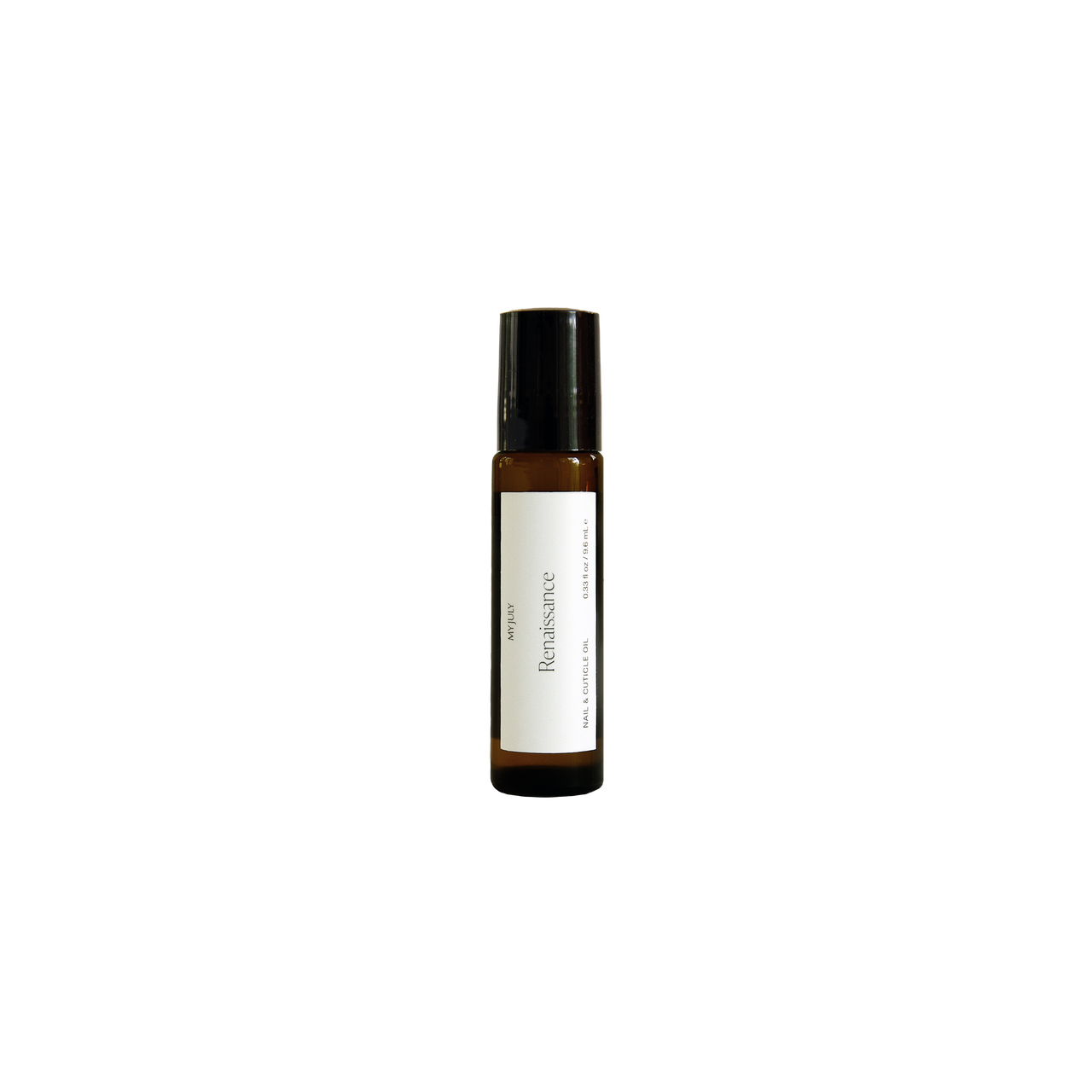
Because nails, cuticles, and skin function differently, it makes sense to care for them differently, too. Our Renaissance Nail & Cuticle Oil is formulated to penetrate where hand creams can’t: softening cuticles, strengthening nails, and supporting healthy growth at the source.